
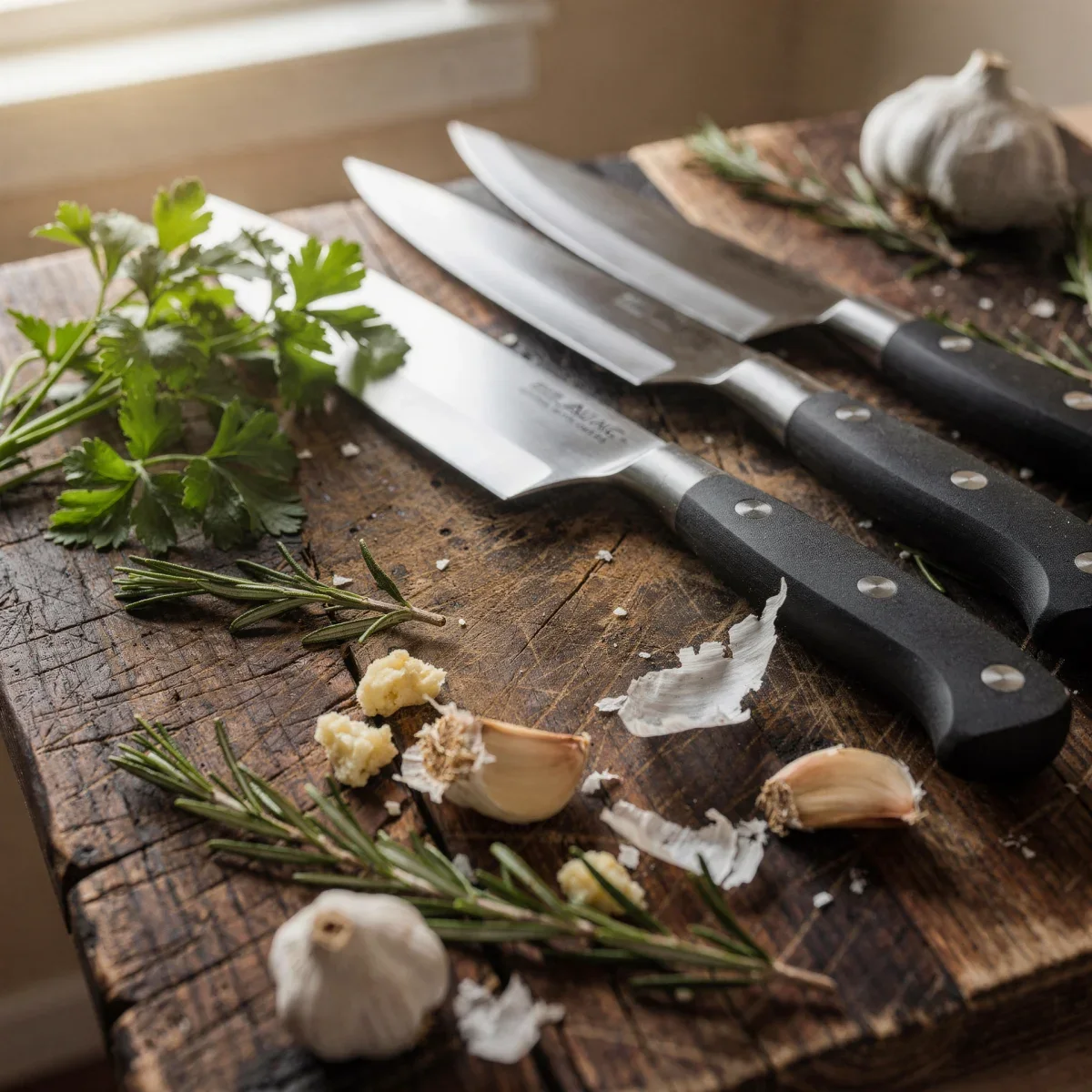
Few kitchen frustrations compare to struggling with a dull blade while chopping an onion. Most discount knife sets look shiny in the box, but they lose their edge fast and wobble after a few trips through daily meal prep. Learning how to buy kitchen knives that last saves you money, cuts your prep time in half, and makes home cooking significantly safer.
Advertisements
Forged vs. Stamped: Choose the Right Construction
When shopping for durable blades, construction method matters most. Knives generally fall into two categories: forged and stamped.
- Forged Knives: Made from a single piece of heated steel pounded into shape. They feature a thicker bolster (the junction between blade and handle) and a full tang, meaning the metal extends through the entire handle. They feel substantial, balanced, and withstand decades of sharpening.
- Stamped Knives: Cut out from a large sheet of steel. While modern high-end stamping has improved, budget stamped knives often feel blade-heavy, lack a full tang, and can bend under pressure.
For everyday durability, look for forged construction with a full tang secured by sturdy rivets.
German vs. Japanese Steel: Match Your Cooking Style
The type of steel determines how sharp the edge gets and how long it holds that edge. Most quality knives sold at retailers like Williams Sonoma, Target, and Amazon use either German or Japanese stainless alloys.
| Feature | German Style (e.g., Wüsthof, Zwilling) | Japanese Style (e.g., Shun, Global) |
|---|---|---|
| Steel Hardness | Softer steel (56–58 HRC) | Harder steel (60–62 HRC) |
| Edge Angle | Wider angle (14°–18°) | Narrower angle (10°–15°) |
| Best For | Heavy-duty chopping, squash, bones | Precise slicing, vegetables, herbs |
| Durability Profile | Resists chipping; needs regular honing | Holds edge longer; can chip if twisted |
If you want a workhorse that handles rough prep without worry, German steel is tough to beat. If you prioritize razor-sharp precision, Japanese steel delivers exceptional performance.
Key Design Details of Kitchen Knives That Last
Beyond the blade itself, small design elements tell you whether a knife can handle years of daily use.
Check the handle material first. Dense composite woods (like Pakkawood) or durable synthetics (such as POM or polypropylene) resist moisture and cracking. Avoid untreated natural wood handles, which warp and harbor bacteria if exposed to water over time.
Pay attention to weight distribution. Hold the knife where the handle meets the blade; a well-built tool should feel balanced in your hand, not tipping sharply forward or dragging backward.
Skip the 15-Piece Block Set
It is tempting to buy a massive wooden block loaded with a dozen specialty blades for $99, but that is usually a trap. Manufacturers cut corners on steel quality to keep the set price low, and most home cooks only use three knives regularly:
- 8-inch Chef’s Knife: Your daily workhorse for 90% of cutting tasks ($50–$150).
- 3.5-inch Paring Knife: Perfect for peeling fruit, trimming fat, and detail work ($25–$60).
- 8- to 10-inch Serrated Bread Knife: Essential for crusty bread, tomatoes, and tender cakes ($30–$80).
Buying these three pieces open-stock allows you to invest in premium steel that will not need replacing in two years.
Quick Takeaways
- Look for forged blades with a full tang and high-carbon stainless steel for maximum longevity.
- Build a small kit of three quality knives instead of buying an oversized, low-quality block set.
- Hand-wash your blades with mild soap and dry them immediately; dishwashers ruin good edges.
Frequently Asked Questions
How long should a quality kitchen knife last?
A well-made forged knife with high-carbon stainless steel can easily last 20 to 30 years—or even a lifetime—when properly hand-washed, stored in a sheath or magnetic strip, and sharpened annually.
Can I put high-end kitchen knives in the dishwasher?
No. Dishwasher detergent contains harsh abrasives, high heat warps handles, and turbulent water bounces blades against racks, quickly dulling or chipping the cutting edge.
How often do I need to sharpen my knives?
Hone your blade with a ceramic or steel rod every few uses to realign the edge. Plan for full sharpening with a whetstone or professional service once every 6 to 12 months.
Investing in kitchen knives that last turns routine cooking into an effortless habit rather than a chore. Start by upgrading your primary chef’s knife, and explore our kitchen storage guide to keep your new blades protected for the long haul.