
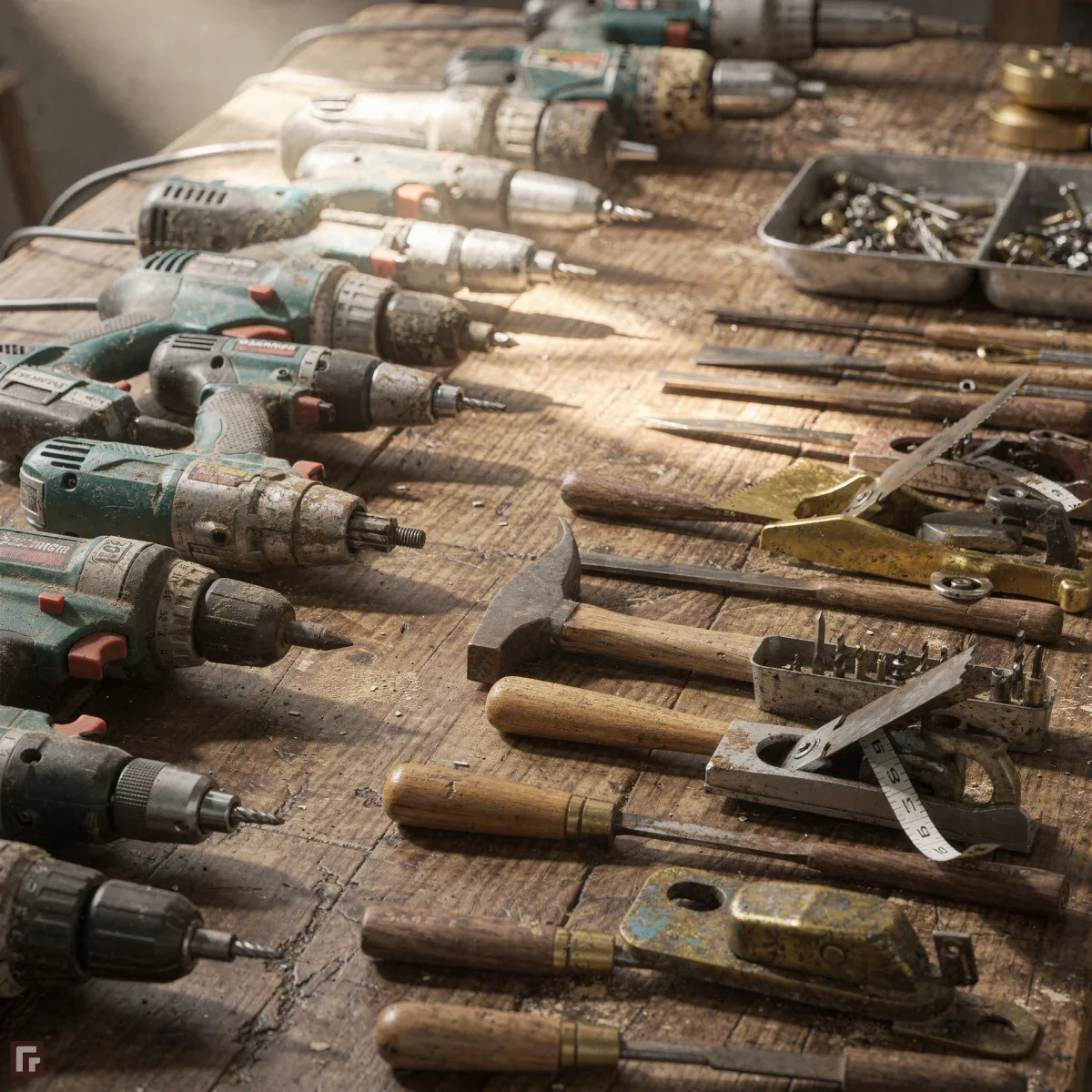
Outfitting a home workshop can get expensive fast, but you do not need to pay brand-new retail prices for reliable equipment. Mastering the basics of buying second-hand tools allows you to score professional-grade drills, saws, and wrenches for pennies on the dollar. With a few clear inspection habits, you can spot hidden gems and leave behind broken gear.
Advertisements
Inspect Power Tools Before Handing Over Cash
Power tools carry the most moving parts and potential failure points. Before committing to a purchase on platforms like Facebook Marketplace, OfferUp, or at local garage sales, run through a quick physical checklist.
- Cords and Plugs: Look closely for frayed wiring, exposed copper, or electrical tape repairs near the strain relief boot. Replacing a damaged cord is possible, but it should factor directly into your offer price.
- Motor Smell and Sparks: Plug the tool into an outlet or portable power station. Run it for five seconds. A tiny blue spark near the motor brushes is normal, but heavy orange arcing, a burning plastic smell, or excessive smoke means the motor is near the end of its life.
- Chuck and Blade Alignment: On drills and circular saws, check for wobble (runout). Spin the chuck or arbor by hand; any play or grinding noise suggests worn bearings.
- Trigger Responsiveness: Test variable speed triggers to ensure smooth acceleration rather than an all-or-nothing jump in speed.
How to Assess Hand Tools and Vintage Metal
Unlike power equipment, quality hand tools can last several lifetimes if maintained properly. Older cast-iron hand planes, socket sets, and forged hammers from reputable heritage makers often outperform modern entry-level tools sold at big-box retailers.
| Condition Factor | Green Light (Safe to Buy) | Red Flag (Pass on It) |
|---|---|---|
| Surface Rust | Light brown patina that rubs off with steel wool. | Deep pitting, bubbling metal, or structural flaking. |
| Wrench Jaws | Square edges with minimal rounding on flats. | Spread jaws, gouges, or severe chrome peeling. |
| Chisels & Planes | Flat backs with plenty of blade steel remaining. | Cracked cast iron soles or welded repairs. |
| Pliers & Cutters | Smooth pivot action with aligned cutting edges. | Loose rivets, chipped cutters, or seized joints. |
Know the Cordless Battery Eco-System
Cordless power tools present a unique hurdle because lithium-ion batteries degrade over time. If a cordless tool package seems suspiciously cheap, the batteries may no longer hold a charge.
Stick with major battery platforms like Milwaukee, DeWalt, Makita, or Ryobi so you can find replacement batteries easily at stores like The Home Depot or Lowe's. Always ask the seller to have the battery fully charged before you arrive. Use the onboard fuel gauge to verify capacity, insert the pack into the tool, and run it under slight resistance to ensure the battery does not instantly cut out under load.
Where to Find the Best Second-Hand Deals
Finding quality tools comes down to knowing where motivated sellers list their items. Estate sales are prime locations for complete sets of hand tools, mechanics' chests, and stationary woodworking machinery. Local pawn shops frequently negotiate on prices, especially if an item has sat on the shelf for more than thirty days.
When meeting private sellers from online classifieds, pick a public, well-lit location. If you need to test a corded tool, meet outside a home improvement store or bring a small automotive power inverter so you can verify operation on the spot.
Quick Takeaways
- Test before you pay: Always power on electrical tools to check for motor arcing, excessive heat, and bearing wobble.
- Focus on quality brands: Pro-grade used tools generally outlast budget brand-new alternatives.
- Factor battery replacement into the price: Assume well-used lithium-ion batteries may have reduced runtime.
Frequently Asked Questions
Is it worth buying used cordless tools without batteries?
Yes, if the tool body (bare tool) is priced significantly below retail and you already own compatible batteries on that brand's platform. Otherwise, buying new batteries separately can erase your savings.
How can I tell if a second-hand tool is stolen?
Be cautious if the seller cannot explain how the tool works, lists brand-new contractor tools at cut-rate prices, or has ground off serial numbers and company markings.
What is the best way to clean rusty hand tools?
Soak metal parts in an evaporative rust converter or white vinegar for several hours, scrub with a brass brush, dry thoroughly, and apply a light coat of paste wax or 3-In-One oil.
Final Thoughts
Smart shoppers know that buying second-hand tools is the most practical way to build a capable workshop on a reasonable budget. Take your time inspecting moving parts, test every switch before exchanging money, and you will walk away with dependable gear ready for your next project. Explore our latest tool storage guides to keep your newly acquired gear protected and organized.