
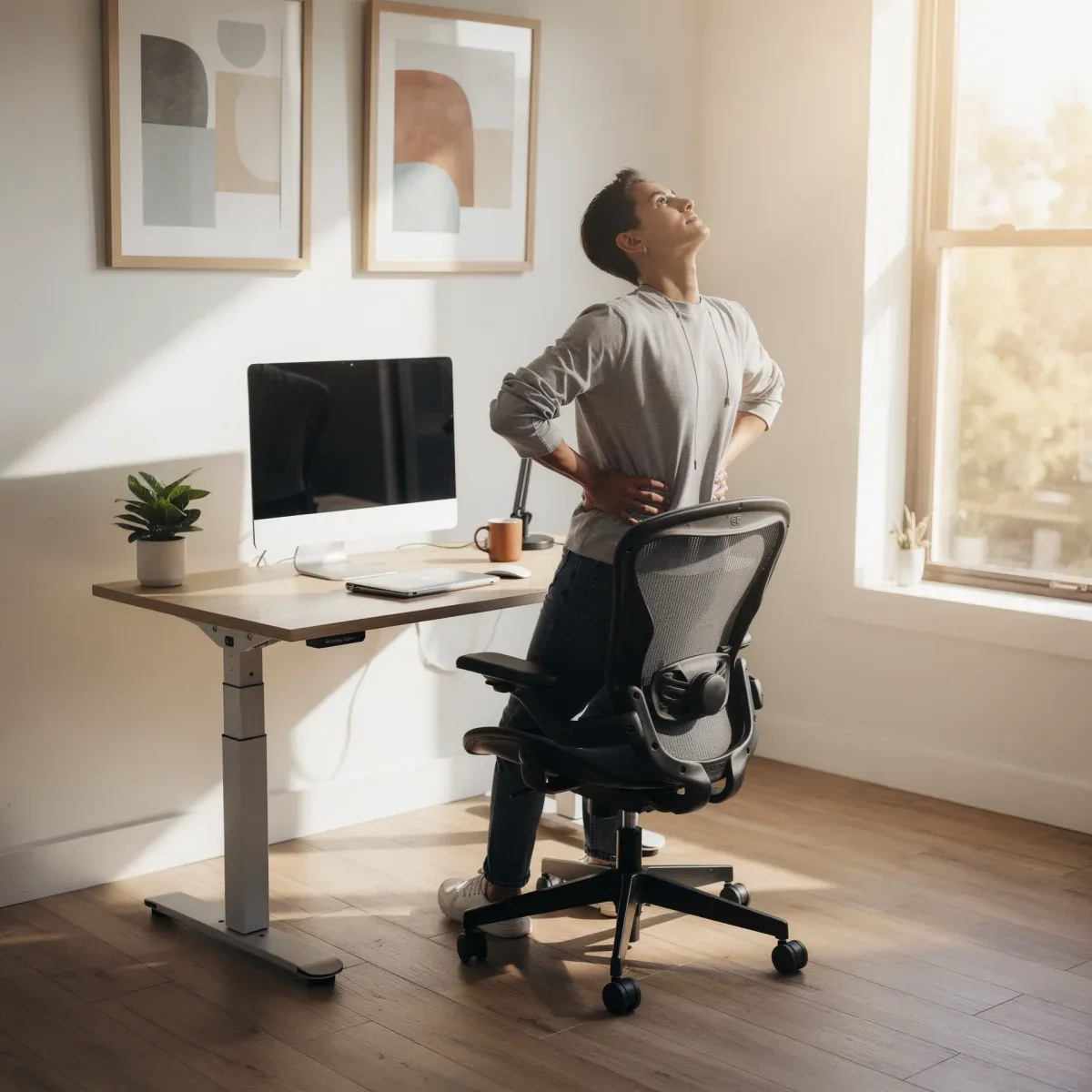
If you spend six to eight hours a day parked in an office chair, you probably know the feeling of stiff shoulders, an aching lower back, and a tight neck. Over time, prolonged sitting shifts your body into compensation patterns that feel hard to break. Learning how to reset your posture throughout your workday can relieve daily discomfort, boost energy levels, and keep your spine healthy.
Advertisements
Why Sitting All Day Takes a Toll on Your Alignment
Human bodies are built to move, walk, hinge, and reach. When you sit for extended periods, several structural shifts happen almost immediately. Your hip flexors remain in a shortened, contracted state, while your glutes stay relaxed and inactive. Over hours and weeks, this imbalance pulls your pelvis forward into an anterior tilt, placing unnecessary stress on your lumbar spine.
At the same time, looking down at a laptop or typing on a keyboard leads to forward head posture and rounded shoulders. For every inch your head drifts forward past neutral alignment, the workload placed on your cervical spine increases significantly. The good news is that you do not need an hour of intense therapy to counter these effects; consistent, targeted micro-movements throughout your day make the biggest difference.
The 5-Minute Routine to Reset Your Posture Fast
You can perform these five targeted movements right by your desk without any special gym gear. Moving through this circuit once or twice a day helps wake up dormant muscles and lengthen chronically tight areas.
1. Seated Chin Tucks
Sit upright with your shoulders relaxed. Look straight ahead, then gently draw your chin back toward your throat as if creating a double chin, keeping your gaze level. Hold the position for 3 to 5 seconds, then release. Repeat this 10 times to counteract forward head posture and strengthen the deep cervical flexors.
2. Doorway Chest Stretch
Stand in an open doorway and place your forearms on the door frame with your elbows bent at 90-degree angles. Step one foot forward slowly until you feel a gentle opening across your chest and the front of your shoulders. Hold for 20 to 30 seconds while taking slow, steady breaths, then switch legs.
3. Standing Hip Flexor Opener
Step your right leg back into a shallow lunge while keeping your back heel off the floor. Gently squeeze your right glute and tuck your pelvis slightly under your torso until you feel a stretch along the front of your right hip. Reach your right arm overhead to deepen the movement. Hold for 20 seconds, then repeat on the opposite side.
4. Seated Thoracic Extensions
Sit tall in your chair with your feet flat on the floor. Interlace your fingers behind your head and support your neck. Gently arch your upper back over the top of the chair backrest while keeping your lower back stable. Pause for 3 seconds at the top of the motion, return to neutral, and perform 8 to 10 smooth repetitions.
5. Wall Angels
Stand with your heels, glutes, upper back, and head against a flat wall. Bring your arms up into a goalpost shape against the wall. Slowly slide your arms up overhead as far as you can without arching your lower back away from the wall. Slide back down to the starting position for 10 controlled reps.
Ergonomic Tweaks That Support Proper Alignment
Stretching helps loosen tight muscles, but adjusting your workstation prevents posture breakdown in the first place. Small equipment tweaks keep your joints centered with minimal muscular effort.
| Ergonomic Element | Common Mistake | Posture-Friendly Adjustment |
|---|---|---|
| Monitor Height | Screen placed too low, forcing neck flexion | Top third of the screen level with eye line (about 20–30 inches away) |
| Chair Height | Feet dangling or knees tucked back under chair | Feet flat on the floor with knees bent at a 90-to-100-degree angle |
| Armrest Position | Shoulders elevated or forearms unsupported | Elbows bent at 90 degrees with shoulders completely relaxed |
| Keyboard & Mouse | Reaching forward past comfortable arm span | Positioned close enough that upper arms stay parallel to your torso |
Daily Micro-Habits for Long-Term Spinal Health
Building good posture is less about holding a rigid, perfect position all day and more about varying your positions frequently. Try adopting these simple habits into your routine:
- Follow the 30-Minute Movement Rule: Set a recurring timer or use a smartwatch prompt to stand up, walk across the room, or stretch for 60 seconds every half hour.
- Alternate Between Sitting and Standing: If you use an adjustable standing desk, aim for a balanced rhythm, such as 45 minutes of sitting followed by 15 to 20 minutes of standing.
- Anchor Good Breathing: Shallow chest breathing tightens your neck and upper traps. Practice diaphragmatic belly breathing to help expand your ribcage naturally.
- Hydrate Regularly: Keeping a water bottle at your desk provides a built-in reason to stand up, refill, and walk every few hours.
Quick Takeaways
- Sitting tightens your hip flexors and rounds your shoulders, making active movement breaks essential throughout the day.
- A quick 5-minute mobility circuit of chin tucks, chest stretches, and hip openers can immediately reduce desk-related strain.
- Setting your monitor at eye level and keeping your feet flat on the floor provides steady, low-effort spinal support.
Frequently Asked Questions
How often should I reset my posture during an 8-hour workday?
Aim to change your position every 30 to 45 minutes. A quick 30-second stand-and-stretch break keeps blood flowing and stops your muscles from locking into a slouched pattern.
Do posture corrector braces actually work?
Posture braces provide a temporary reminder to sit upright, but relying on them can weaken your core and back muscles. Active stretching and ergonomic desk setups offer far better long-term results.
Can walking help fix poor desk posture?
Yes. Walking naturally extends your hip flexors, engages your glutes, and encourages spinal rotation. Even a brisk 10-minute walk during lunch noticeably improves daily mobility.
Moving Forward
Taking proactive steps to reset your posture does not require complicated workout gear or huge lifestyle overhauls. Pick two simple stretches from this guide and try them during your next work break to feel the difference in your back, neck, and energy levels. If you found this guide helpful, check out our related wellness articles on workplace ergonomics and functional home fitness routines.
This article is for informational purposes only and is not a substitute for professional medical advice. Talk to your doctor before making changes to your health routine.