
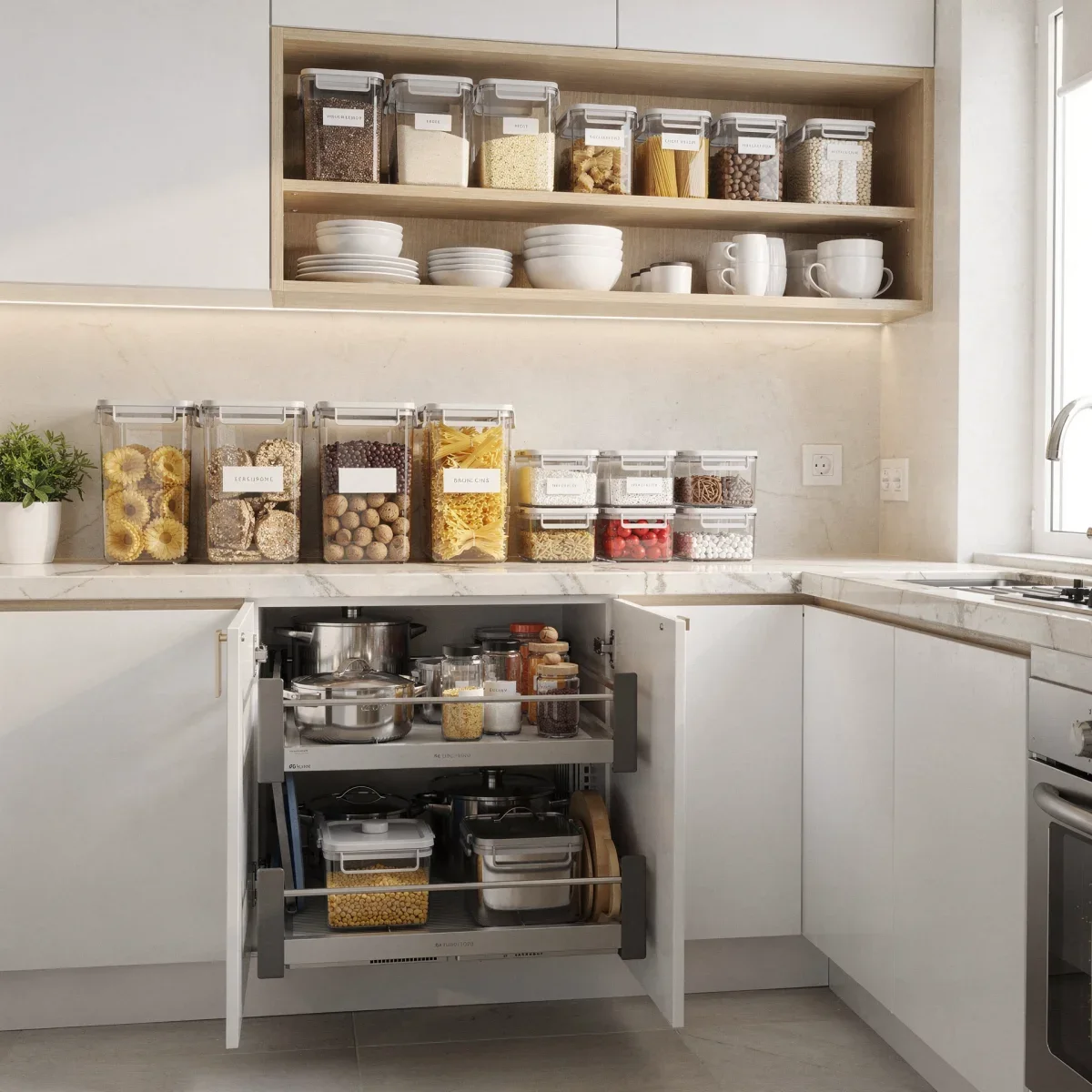
Living with a tiny kitchen often feels like playing a daily game of Tetris with your groceries. Finding the best practical storage containers for small kitchen spaces can instantly transform chaotic cabinets into streamlined, easy-to-reach storage. Whether you are dealing with narrow pantry shelves, minimal counter space, or awkward deep drawers, the right containers make every square inch count.
Advertisements
Top Space-Saving Storage Container Picks
When square footage is tight, standard round canisters and mismatched takeout tubs waste valuable vertical and corner room. Rectangular, modular, and nested designs provide the maximum volume without claiming extra shelf space.
| Container Type | Best For | Key Benefit |
|---|---|---|
| OXO Good Grips POP Containers | Dry Pantry Goods (Flour, Rice, Pasta) | Airtight seal, straight edges, modular stacking |
| Rubbermaid Brilliance Glass/Plastic | Meal Prep & Fridge Leftovers | 100% leak-proof, crystal clear, stacks neatly |
| Collapsible Silicone Food Bins | Tiny Drawers & Occasional Leftovers | Flattens to 1/3 of its height when empty |
| Joseph Joseph Nest Lock Set | Cabinet Drawer Organization | Color-coded bases and lids nest inside one another |
Key Features to Look for in Small-Space Food Storage
Before buying a multi-piece set from Amazon or Target, consider how the design interacts with your kitchen layout.
- Stackability: Choose flat-top lids that interlock securely so you can build upward safely.
- Square or Rectangular Profiles: Round jars leave empty gaps between them, whereas square footprints sit flush against cabinet walls.
- Nesting Capabilities: When empty, containers should fit completely inside each other to keep cabinet clutter to a minimum.
- Transparency: Clear sides let you check ingredient levels at a glance without pulling multiple bins out of deep cabinets.
How to Organize Cabinets with Modular Bins
Once you choose suitable modular storage containers for small kitchen pantries, group items by category. Keep baking essentials in uniform tall containers on upper shelves, while placing everyday snacks and grains at eye level. Labeling lid tops or bin fronts with a simple chalk pen helps you identify contents immediately when looking from above in pull-out drawers.
Quick Takeaways
- Modular, rectangular containers maximize pantry depth better than round jars.
- Nesting sets and collapsible silicone designs conserve precious cabinet space when not in use.
- Airtight seals keep staple ingredients fresh longer, cutting down on unnecessary bulk food waste.
Frequently Asked Questions
Are glass or plastic containers better for small kitchens?
Plastic is lighter and stacks higher with less breakage risk. However, glass is oven-safe and stain-resistant. For tight cabinets, lightweight BPA-free plastic or nesting glass sets work best.
How do I store container lids without wasting drawer space?
Use a compact vertical lid organizer or purchase nested container sets where lids snap securely together, keeping them upright and tidy inside one cabinet drawer.
Do collapsible silicone containers hold liquids safely?
Most collapsible silicone bins work well for solid leftovers and meal prep, but you should always verify that the lid has a locking airtight clip before packing soups or sauces.
Upgrading to efficient storage containers for small kitchen setups takes the frustration out of cooking in compact quarters. Start by measuring your shelf heights, clear out expired pantry items, and pick a modular set that builds upward instead of outward.