
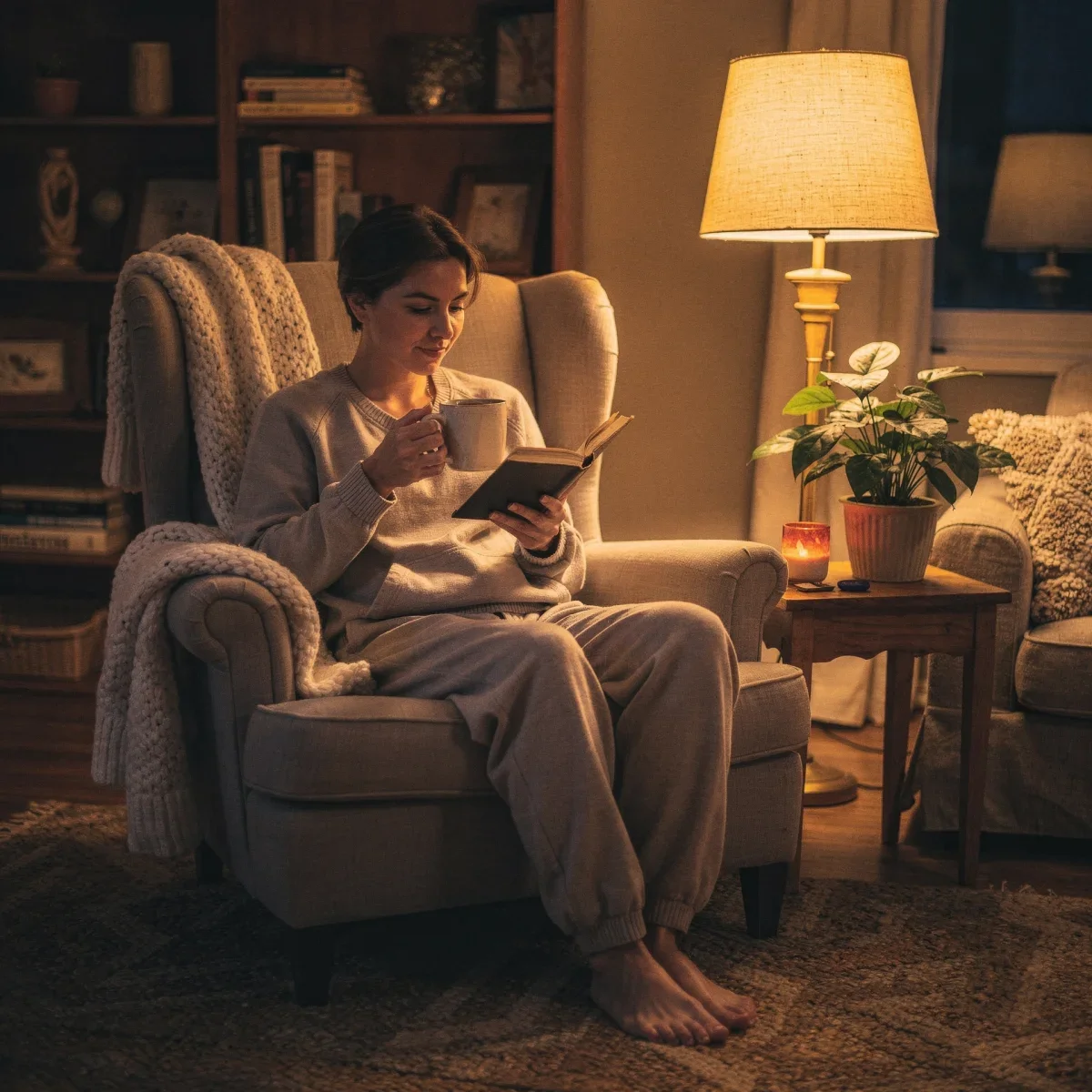
After a demanding workday, your first instinct might be to collapse onto the couch and scroll through social media or stream a series. While digital entertainment feels effortless, blue light and constant visual stimulation often keep your nervous system in overdrive. Learning how to wind down without screens gives your brain the quiet buffer it needs to truly recover and prepare for deep rest.
Advertisements
Shift Your Physical Environment with Low Lighting
Your brain takes cues from your surroundings to signal when it is time to relax. Overhead fluorescent lights and bright LEDs mimic daytime sun, suppressing natural melatonin production. As soon as you log off for the evening, switch off your primary lights and rely on softer, ambient sources.
- Turn on warm-toned bedside lamps (look for bulbs in the 2200K to 2700K range).
- Light a non-toxic soy or beeswax candle with subtle scents like lavender, cedarwood, or vanilla.
- Put your phone and work laptop in a designated drawer or charging station outside the bedroom.
These subtle visual changes create a clear boundary between your active work hours and your personal evening time.
Use Temperature to Ease Muscle Tension
Physical stress frequently manifests as tight shoulders, a stiff neck, or a clenched jaw. One of the fastest ways to release that built-up tension is through passive heat therapy. Taking a warm bath or a hot shower roughly 60 to 90 minutes before bed triggers a natural thermoregulation process: your blood vessels dilate, and as your body cools down afterward, your internal core temperature drops, signaling sleep readiness.
| Evening Habit | Primary Benefit | Time Required |
|---|---|---|
| Warm Epsom Salt Bath | Relieves muscle tightness and calms the body | 15–20 minutes |
| Chamomile or Mint Tea | Soothing sensory ritual for digestion | 10 minutes |
| Floor Stretches / Legs-Up-the-Wall | Downregulates heart rate and nervous system | 10 minutes |
Engage in Tactile, Low-Energy Activities
Your hands are used to typing and tapping glass all day. Swapping those digital inputs for tactile, physical hobbies helps quiet mental chatter without demanding heavy concentration.
Consider picking up a physical book or magazine from your local library. If reading feels too demanding after a long day, try light journaling to clear your thoughts. A simple braindump—writing down tomorrow's to-do list alongside three things that went well today—helps prevent midnight worry loops. Other great screen-free options include working on a jigsaw puzzle, sketching, or tending to houseplants.
Try Gentle Breathwork and Restorative Stretches
When you spend hours sitting at a desk or dealing with tight deadlines, your breathing becomes shallow. Taking ten minutes for deliberate, slow movement helps counter that stress response.
You do not need a vigorous workout; in fact, intense evening exercise may raise your core temperature and delay sleep. Instead, practice gentle restorative yoga poses on your rug. The "legs-up-the-wall" pose (Viparita Karani) is especially effective for relieving lower-body fatigue and slowing your pulse. Pair this with 4-7-8 breathing—inhale for 4 seconds, hold for 7, and exhale slowly for 8—to trigger your body's parasympathetic rest-and-digest state.
Quick Takeaways
- Dim the lights: Switch to warm lamps and stow devices in another room to signal natural melatonin release.
- Leverage heat: Take a warm shower or enjoy a hot caffeine-free tea to drop physical tension.
- Ground your body: Use gentle stretching, tactile hobbies, and slow breathwork to quiet racing thoughts.
Frequently Asked Questions
How long should my screen-free routine be?
Even 30 to 45 minutes of screen-free time before bed can significantly improve your sleep quality and lower evening stress levels.
What should I do if my mind races without digital distraction?
Try writing down your thoughts in a notebook or listening to an analog audio source, like soft instrumental music or soothing ambient sounds.
Is reading on an e-reader acceptable for evening wind-down?
Standard e-ink readers without front-lit blue light are generally fine, but physical paper books remain the best option to completely rest your eyes.
Start Your Screen-Free Evening Routine
Building a habit to wind down without screens does not require an all-or-nothing overhaul. Start tonight by unplugging just thirty minutes before you plan to sleep and choosing one calming, hands-on activity. If you found these tips helpful, share this guide with a friend or check out our related wellness articles for more practical health advice.
This article is for informational purposes only and is not a substitute for professional medical advice. Talk to your doctor before making changes to your health routine.